2.0Ah for starter kits, 4.0Ah for mainstream tools and 5.0Ah for longer runtime or higher-load cordless programs.
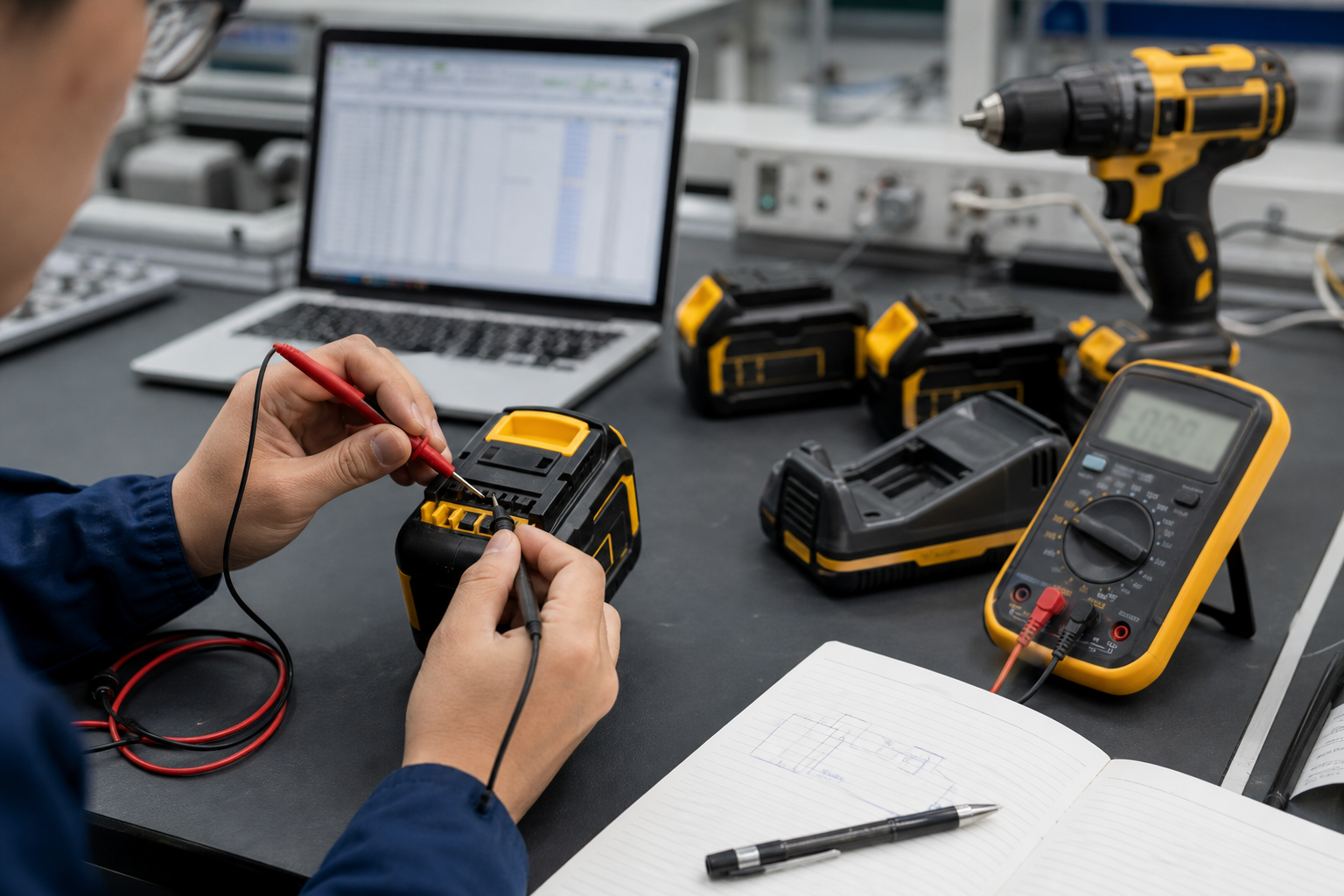
For wholesalers, distributors & private labels
Professional Cordless Battery & Charger Manufacturer
VoltForge supplies 20V and 40V lithium battery and charger systems with 2.0Ah, 4.0Ah and 5.0Ah packs, standard or rapid charger options, UN38.3/MSDS transport document routes and MOQ from 800 units. The battery system is the repeat-purchase engine behind a cordless tool range, so capacity, charger, cell route, packaging and shipping paperwork must be selected together.
Built for your market
A Cordless Battery & Charger System range your customers will understand.
The battery and charger shape the way a whole cordless range performs, ships and sells. A larger pack adds runtime, but it also changes weight, shelf price and freight cost. We help you select the pack, charger plug, cell route, carton label and transport documents that fit your tools, target market and replenishment plan. The goal is a battery system that customers can understand and distributors can keep selling after the first kit.
Already know your target market, channel or annual volume? Share it with us and we will recommend a practical starting configuration.
Align contact layout, BMS route and charger choice across drill, driver, grinder and future bare-tool sales.
Confirm air/sea route, carton marking, UN38.3, MSDS and packing method before the first container is booked.
Input voltage, plug, charging time, thermal behavior and label language are checked against the destination market.
Explore the range
Choose the right starting point.
Start with the model closest to your market. We can adjust the battery, packaging, documents and order plan around it.
Specifications, MOQ & lead time
Everything you need for a first quotation.
Final pricing depends on the selected motor, battery, packaging and destination. Send us your target configuration for a confirmed quotation.
| Buying field | Available range / commercial reference |
|---|---|
| Working range | 20V / 40V lithium packs; 2.0Ah / 4.0Ah / 5.0Ah; standard or rapid charger |
| Cell / charger options | Cell route by performance target, BMS protection, 100-240V input, destination plug and charging-time option |
| Price guidance | USD 8-42 EXW by capacity, cell route, charger, certification scope and order quantity |
| MOQ | 800 packs for standard battery route; 1,000+ for special cell, private label or dedicated packaging scope |
| Sampling | 12-20 days for standard pack/charger; 20-30 days for plug, label, document or cell-route changes |
| Production lead time | 35-50 days after sample and shipping-document scope are confirmed |
| Certification route | UN38.3 / MSDS for lithium transport; charger safety and plug route by target market; carton and label checks before shipment |
For an accurate quotation: confirm the tool configuration, target market, battery or accessory route, packaging and expected order quantity.
Built for different markets
A different range for every sales channel.
Retailers, distributors and trade buyers often need different voltage, packaging and price positions. We can match the build to the way you sell.
Starter retail kit
Use 2.0Ah with a standard charger when compact weight and entry price matter more than extended runtime.
Mainstream 20V platform
Use 4.0Ah as the shared working pack across drill, driver and selected grinder kits.
Trade and grinder program
Use 5.0Ah with a suitable charger when runtime and performance continuity are part of the sales promise.
Find your fit
Compare popular configurations.
Use these examples as a starting point. We can fine-tune the final configuration for your product range and market.
| Platform / range | Type | Key characteristic | Typical use |
|---|---|---|---|
| 2.0Ah | Starter lithium pack | Lower weight and lower kit cost | Compact drill/driver, entry retail and promotional kit |
| 4.0Ah | Mainstream lithium pack | Balanced runtime, weight and shared-platform appeal | 20V distributors, hardware retail and bundle programs |
| 5.0Ah | Trade lithium pack | Longer runtime and stronger performance perception | Brushless drill, grinder and installer channels |
| 40V 4.0Ah / 5.0Ah | Higher-output power system | Separate high-output platform logic | Heavier cordless range and contractor programs |
Not sure where to start? For a first 20V private-label range, begin with 2.0Ah in the entry drill/driver kit and 4.0Ah as the core replenishment pack. Add 5.0Ah only when the product mix includes brushless or grinder applications that genuinely need it. We will review the final selection against the intended work, destination market and approved sample.
Private label options
Put your brand on a platform that works.
Choose light branding for a faster launch, or deeper engineering changes for a different product offer.
Launch with an existing platform.
- Battery label, logo and capacity mark
- Charger plug and input label
- Standard color box and carton mark
- Manual language and shipping-label review
Build a product around your brief.
- Cell route and BMS requirement review
- Private pack housing color
- Rapid charger and thermal-management route
- Dedicated bare-tool or replenishment packaging program
For a faster launch: standard models can move to samples quickly. New colors, packaging, product configurations or documents need a joint review before confirmation.
Confirm user, market and target cordless battery and charger system configuration.
Lock platform, performance, battery/accessory and document route.
Prepare the agreed tool, pack-out and initial file checklist.
Review performance, artwork, packaging and commercial details together.
Run the approved build through defined assembly and QC checkpoints.
Release finished goods with pack-out and export document confirmation.
Quality checks
Quality you can verify before shipment.
We record the main control points for each order and can share the relevant reports, photos and documents for your configuration.
Incoming components
Cells, BMS boards, contacts, housings and charger parts are checked against the approved component list.
Verified with: Lot record, visual check and component traceability labelPack assembly
Cell placement, weld condition, insulation and contact fit are checked before final housing closure.
Verified with: Assembly record, weld check and fit gaugeProtection function
Charge, discharge, over-current and temperature protection behavior are checked by the agreed sample plan.
Verified with: BMS test fixture and electrical-function recordCharge / thermal test
Battery and charger are monitored for charge time, heat behavior and basic compatibility under controlled conditions.
Verified with: Charge bench, temperature reading and charge-time recordOutgoing / shipping check
Label, capacity mark, charger plug, carton pack-out and document set are checked before release.
Verified with: AQL checklist, carton-label review and document checklistFor your market
Built for retailers, distributors & trade buyers.
We match the recommended configuration, packaging and supporting documents to the way your customers buy and use the product.
Hardware retail
Give entry kits a price and weight balance that customers can understand quickly.
Recommended: 20V 2.0Ah pack with standard charger
Typical form: Clear capacity label, color-box plan and charger plug route
Distributor platform
Create a replenishment system that encourages repeat battery sales.
Recommended: 20V 4.0Ah main pack plus bare-tool compatibility
Typical form: Compatibility chart, carton plan and retailer SKU structure
Trade / grinder use
Support users who need more usable runtime than a compact starter pack can deliver.
Recommended: 20V 5.0Ah with brushless tool or grinder kit
Typical form: Charge, thermal and transport-document preparation
Before you order
Six details to confirm for a smooth launch.
Share these details with us and we can prepare a more accurate quotation, sample plan and document checklist.
Choose Your Voltage Platform
Tell us whether your cordless battery and charger system should sit in a 12V, 16V, 20V or 40V range, and whether it needs to share batteries with existing tools.
Match the Tool to the Job
Share the main application, target output, motor preference and price position. We will recommend a configuration that fits the work and your market.
Agree the Quality Checks
Let us know which performance, appearance and function checks matter most for your order. We can include them in the sample and inspection plan.
Confirm Your Market
Share the destination country, charger plug, battery shipping route and any compliance or transport documents required.
Approve Branding & Packaging
Send your logo, color reference, packaging, manual, barcode, accessory and case requirements so we can prepare the right artwork plan.
Plan Quantity & Delivery
Tell us the expected quantity, carton format, pallet needs, shipment method and preferred delivery date.
Why VoltForge
What you can expect from VoltForge.
From the first sample to final shipment, we help you build a range with clear specifications, practical documentation and a reliable production plan.
System logic
Battery, charger, tool and shipping route are selected together instead of quoted as disconnected accessories.
Capacity clarity
The choice starts with user runtime and channel price point, not a generic claim that bigger is always better.
Transport discipline
UN38.3, MSDS, carton label and shipping method are treated as early buying fields.
Charger fit
Plug, input, charge time and market scope are checked before packaging is printed.
Repeat-purchase path
A well-planned battery line creates a replenishment and bare-tool strategy after the first tool sale.
QC visibility
Pack protection, charge behavior and outgoing document checks are shown as concrete verification steps.
12final assembly lines
1.8Mannual tool capacity
24htechnical RFQ response
4quality control gates
42markets served
10-30dsample route by scope
Frequently asked questions
Common questions, answered.
Need something else? Our engineering and sales teams can review it with you.
Product specifications & engineering
Is 5.0Ah always better than 4.0Ah?
No. A 5.0Ah pack increases runtime but adds weight and cost. It is most useful for brushless tools, grinders and higher-duty users rather than every retail starter kit.
Can one 20V battery fit every tool?
It should fit every tool within the defined platform, but performance varies by load. Use the same pack family while matching capacity to the tool and expected user time.
What should be checked on the charger?
Confirm input voltage, plug, charge time, label language, thermal behavior, tool compatibility and the safety/document route for the destination market.
Which transport documents apply?
Lithium packs typically require UN38.3 and MSDS-related information. The exact document set and carton marking depend on the pack and shipping method.
Customization & commercial terms
What is the battery MOQ?
Standard 20V packs normally start at about 800 units. Special cell routes, private label, rapid charging or dedicated packaging generally require higher quantities.
Can we buy batteries as replenishment SKUs?
Yes. A replenishment pack needs clear compatibility, capacity, label and carton logic so distributors can sell it after the original tool kit.
How long do samples take?
Standard battery and charger samples usually take 12-20 days. Plug, label, document or cell-route changes can extend the route to 20-30 days.
Can the charger plug be changed by market?
Yes, but plug type, input label, charger safety scope and packaging need to be confirmed before the final sample and production release.
Inside our factory
From production floor to final pack-out.
See the people, tools and checks behind each order.
Production

Production floor: Cordless Battery & Charger System assembly prepared for a regional distributor order.

Motor station: component match and build control for the cordless battery and charger system platform.
Product review: buyer sample configuration checked before the next approval stage.
Workshop

Application reference: target user scenario used to confirm configuration and battery choice.
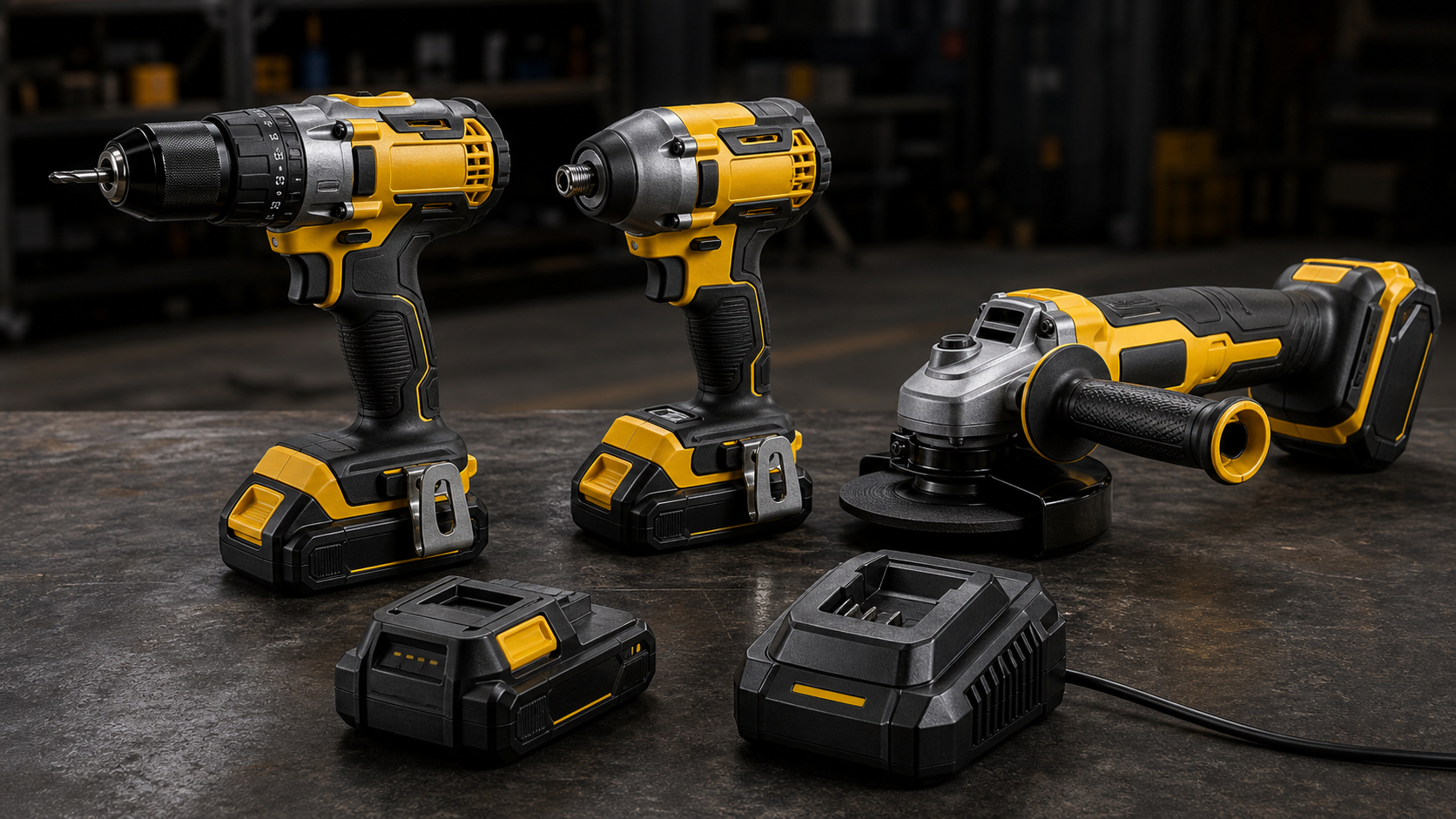
Platform display: shared-battery range used to plan related tools and replenishment packs.
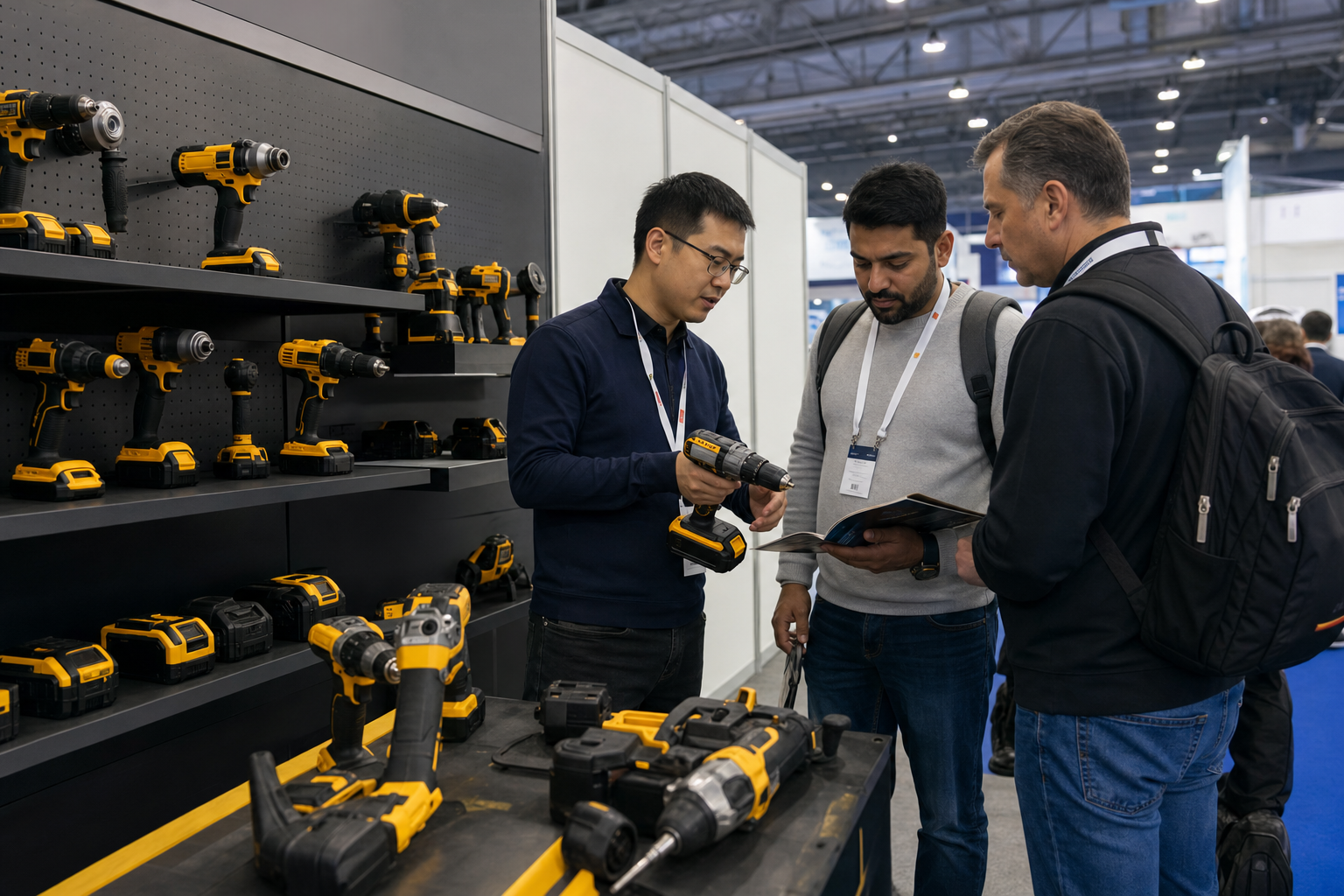
Buyer review: product range shown in a hands-on sourcing and trade setting.
Testing

QC station: functional and endurance checks recorded against the agreed inspection route.
Power-system review: battery and charger behavior checked for the intended work pattern.

Document review: product, battery and export files checked before shipment planning.
Documents & delivery

Engineering and export team: market, packaging and document requirements aligned before release.

Distributor case: platform, cartons and branded launch materials reviewed as one program.

Factory visit: production location and audit route available before a first order.
Sourcing guide
Sourcing Cordless Battery & Charger System: what to check before you order.
01Choosing the Right Cordless Battery & Charger System
The best cordless battery and charger system depends on where and how you plan to sell it. Start with the user, your target price and the role it will play in the range. We can then match the platform, performance level, battery or accessory route, packaging and test plan. With those details agreed, you can compare quotations on the same basis and avoid a sample that looks good on paper but does not suit the final program.
02Choose Your Voltage Platform First
Price is easier to judge once the platform is clear. A lower-voltage model can be the right choice for a price-led retail line, while a shared 20V platform gives distributors more room to add tools and replacement batteries later. Higher-output programs work best when there is a real need for more runtime or heavier work. Tell us about the customer, sales channel and expected shelf position, and we will help you choose the balance of performance, battery cost, carton weight and future range expansion.
03Focus on the Specs That Affect Performance
For cordless battery and charger system, the important figures are the ones that affect the job: torque, output, capacity, disc size, tool mix or charging route. Ask how each figure is measured, which components support it and how the tool performs with the recommended battery, accessory or load. A useful specification includes the working condition as well as the target number. That gives our engineering team something clear to verify during sampling.
04Prepare Documents for Your Market
A product is ready for market when the selected configuration, charger, battery, label, manual, carton and document route all match the destination. CE, EMC, RoHS, UN38.3, MSDS, charger safety and carton marks need to apply to the actual product and shipping method. Share your market and logistics route at the start. We can prepare the right document checklist while the sample is being made, rather than reopening the project after the packaging has been approved.
05How We Check Quality
Each quality check protects a different part of the order. Incoming components, critical assembly, functional testing, load or charge behavior and final pack-out all matter. We can share the relevant inspection method or record for your configuration: fixture checks, meters, load benches, AQL lists, traceability labels or document review. Tell us which product claims matter most to your customers and we will include them in the inspection plan.
06What Affects Price and Lead Time
The main cost drivers are platform choice, motor or cell route, battery capacity, performance hardware, case or color box, print complexity, custom color, order quantity and required documents. Timing changes when any of these items changes after the sample is approved. For a smoother launch, confirm the product configuration, artwork, pack-out and market document checklist together. We will then map the sample, production, inspection and shipment stages for your order.
07Compare Options for Your Product Range
There is rarely one model that suits every customer. A smaller or entry configuration may be better for shelf price and carton weight. A brushless, higher-capacity or shared-platform option may give your range stronger runtime and a clearer upgrade story. Start with the option that fits your most common customer and price band, then keep a defined upgrade for higher-demand users. We can help you build that good, better and best structure.
08Before You Approve Production
Before mass production begins, review the approved sample against the final order: configuration, key performance target, battery, charger or accessory route, logo, color, case or box, manual, labels, carton marks, destination documents, quantity and delivery date. We can provide final pack-out photos and a summary of the outgoing inspection plan. For higher-risk products, you can also request the relevant functional record or sample report before shipment.
Start your project
Tell us about your Cordless Battery & Charger System project.
Tell us where you sell, what you need and how many you expect to order. We will reply with a practical starting configuration, MOQ, sample timing and document checklist.
- Technical reply within 24 hours
- Product, battery or accessory and market review
- Sample, artwork and document plan before production
Request a quotation
Fields marked with * help engineering prepare a useful first response.