Updated: July 15, 2026 · Reading time: 9 minutes

Mia works with importers on cordless-platform planning, retail kit structure and certificate matching before a first sample is released.
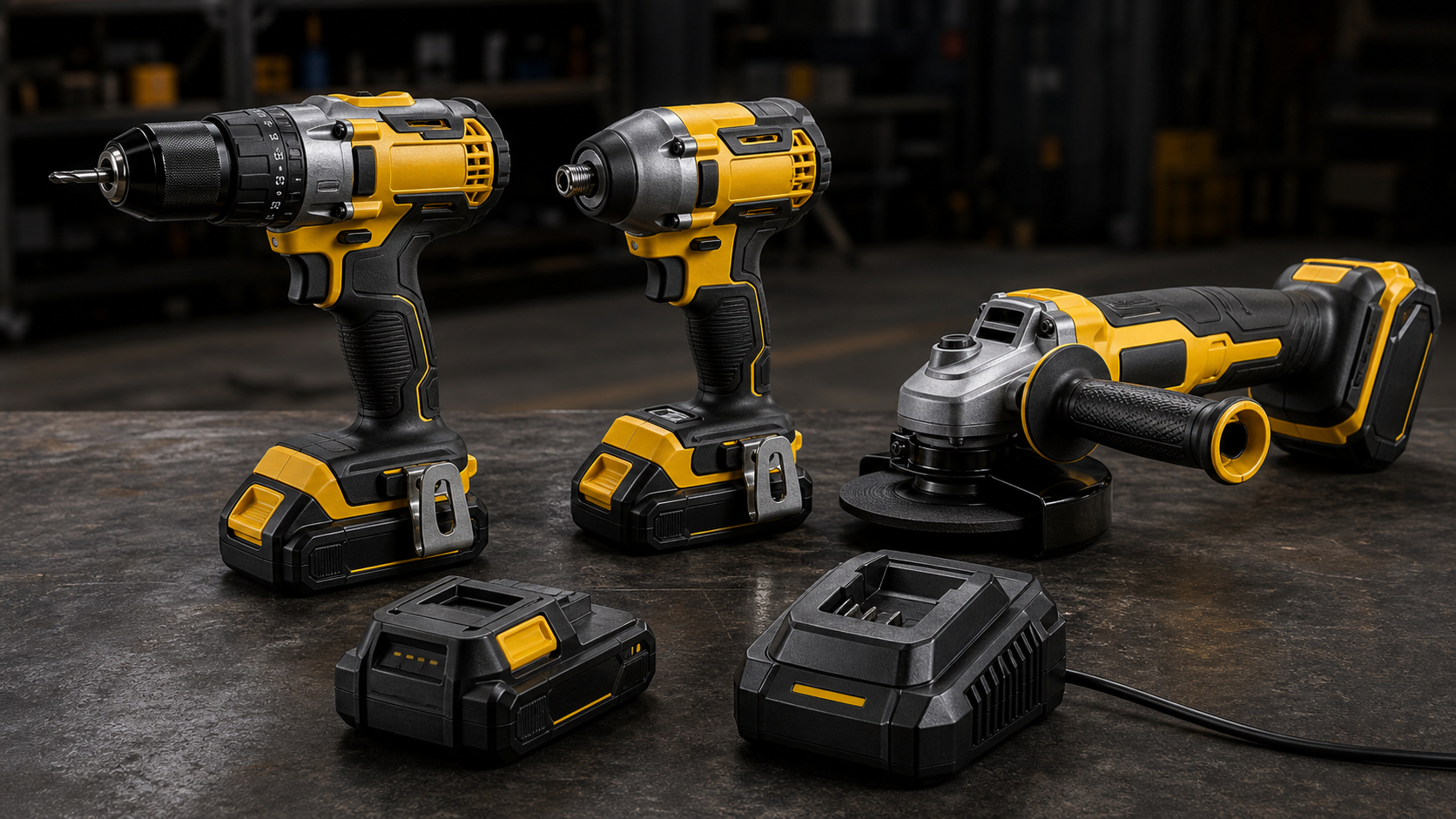
Start with 20V for breadth and repeat sales; choose 40V only when buyers can see and feel the extra output. The better platform is not the one with the larger number. It is the one that lets your first product range fit its buyer, price band and replenishment path without creating too much inventory risk.
The short answer for most importers
A new range usually launches faster and safer on a 20V shared-battery platform.
A 20V platform can cover the tools most distributors need to start selling: drill drivers, impact drivers, compact grinders, work lights, inflators and several kit combinations. It works especially well for hardware chains, DIY retail, installer teams and value-focused private labels. A buyer can begin with three to five SKUs, then sell compatible bare tools and replacement batteries later.
Choose 40V when the buyer has a clear application where the benefit is obvious: larger grinders, rotary hammers, high-demand outdoor tools or a contractor-facing line where runtime and output justify a higher ticket. If the channel cannot explain why it needs 40V, the extra battery cost and narrower first range can make the launch harder rather than stronger.
Who normally buys 20V and who needs 40V?
20V wins broad channel coverage; 40V earns its place in visibly heavier applications.
| Decision point | 20V platform | 40V platform |
|---|---|---|
| Typical buyer | DIY retail, installers, hardware chains, value private labels | Contractors, outdoor-power buyers, heavy-duty retail |
| Best first SKUs | Drill, impact driver, compact grinder, light, inflator | Large grinder, rotary hammer, blower, mower, high-output saw |
| Battery strategy | 2.0Ah starter pack, 4.0Ah core pack, 5.0Ah trade upgrade | 4.0Ah or 5.0Ah pack where runtime and power sell the tool |
| Commercial story | More SKUs, lower entry price, repeat purchases across one family | Higher output, longer runtime, premium or contractor positioning |
| Launch risk | Lower: more tools share the same replenishment battery | Higher: fewer early SKUs must carry a larger battery investment |
For a distributor, this table is not a specification sheet. It is an inventory question. A platform creates a promise: every compatible tool, battery, charger, carton and shelf label must make it easy for the buyer to understand what fits together. That is why the launch should begin with a buyer-use story, not a catalogue full of unrelated voltages.
When does 40V earn its place in the range?
Choose 40V when a buyer can explain the harder job, longer run time or higher-output result in one clear sentence.
Higher voltage should solve a visible buying problem. For example, a landscaping distributor may need a blower or mower that can work through a larger area before a battery swap. A contractor channel may need a rotary hammer or large grinder that holds its output under a demanding load. In those cases, the 40V story is not a number printed on the carton. It is a task, a user and a result that sales staff can demonstrate.
Do not use 40V merely to make a small tool look premium. A compact drill that becomes heavy, expensive and hard to merchandise may sell less well than a balanced 20V kit. Ask the buyer what product they are replacing, what user complaint they are trying to solve, and what retail position they need to defend. If the answer is "we want more power" without a specific job behind it, the commercial case is not ready.
There is also a range-planning question. A 40V tool should have enough related products, battery packs and service support to avoid becoming an isolated SKU. If it needs a separate charger, separate carton logic and separate spare battery but only one tool is likely to move, the buyer should calculate the inventory and after-sales burden before approving it. A 40V extension works best when it becomes a small family with a credible next purchase, not a single hero item that the channel cannot replenish.
How the platform changes your economics
The real platform cost sits in the whole system, not only in the first tool.
A 20V 2.0Ah starter pack gives a retailer a lower shelf price. The same platform can then move into a 4.0Ah drill-and-driver kit or a 5.0Ah grinder bundle without forcing the buyer to learn another charger and another replacement route. That shared system can reduce SKU confusion and gives a distributor a reason to stock batteries as a replenishment product.
A 40V line has a different logic. It is often justified by fewer, higher-value tools. The supplier should show why the user needs that configuration: workload, target material, duty cycle, run time or outdoor use. "More power" is too vague for a buyer to put on a shelf. A retailer needs a clean reason to place the product above an established 20V range.
Which costs belong in the platform decision?
Count battery, charger, carton, spare parts and shelf communication together with the tool cost.
A platform quote is easy to misread when it lists only bare tools. The buyer also needs starter batteries, replacement packs, chargers, adapter plugs where applicable, colour boxes, master cartons, manuals and service parts. A low tool price can lose its advantage if the replacement battery has a high MOQ or if each variation needs different packaging artwork. Conversely, a slightly higher starter kit can be easier to sell if the battery family creates repeat purchases across several tools.
Build one small worksheet for the first launch. List the number of finished tool kits, bare tools, batteries, chargers and cartons that must be stocked. Then mark what can be shared across every item. A three-tool 20V range with two battery capacities may be simpler for a small distributor than two unrelated drill kits with four different chargers. The point is not to reduce every line item to one number; it is to make the customer experience and replenishment path obvious before stock arrives.
| System cost | Question to ask before quotation | Why it affects the launch |
|---|---|---|
| Starter batteries | Which pack belongs in each first kit? | Sets the entry price, kit weight and first-use experience. |
| Replacement packs | Can the channel reorder them in a realistic quantity? | Creates repeat sales and prevents an abandoned platform. |
| Chargers | Which plug, charge time and label route suit the market? | Changes market fit and customer support needs. |
| Packaging | Which tools can share carton structure and visual system? | Controls artwork work, shelf recognition and warehouse handling. |
| Service parts | Which parts will be available after the first order? | Supports warranty handling and longer-term distributor trust. |
How many SKUs should a first platform launch include?
Launch three to five priority SKUs, then expand only after the battery route is proven.
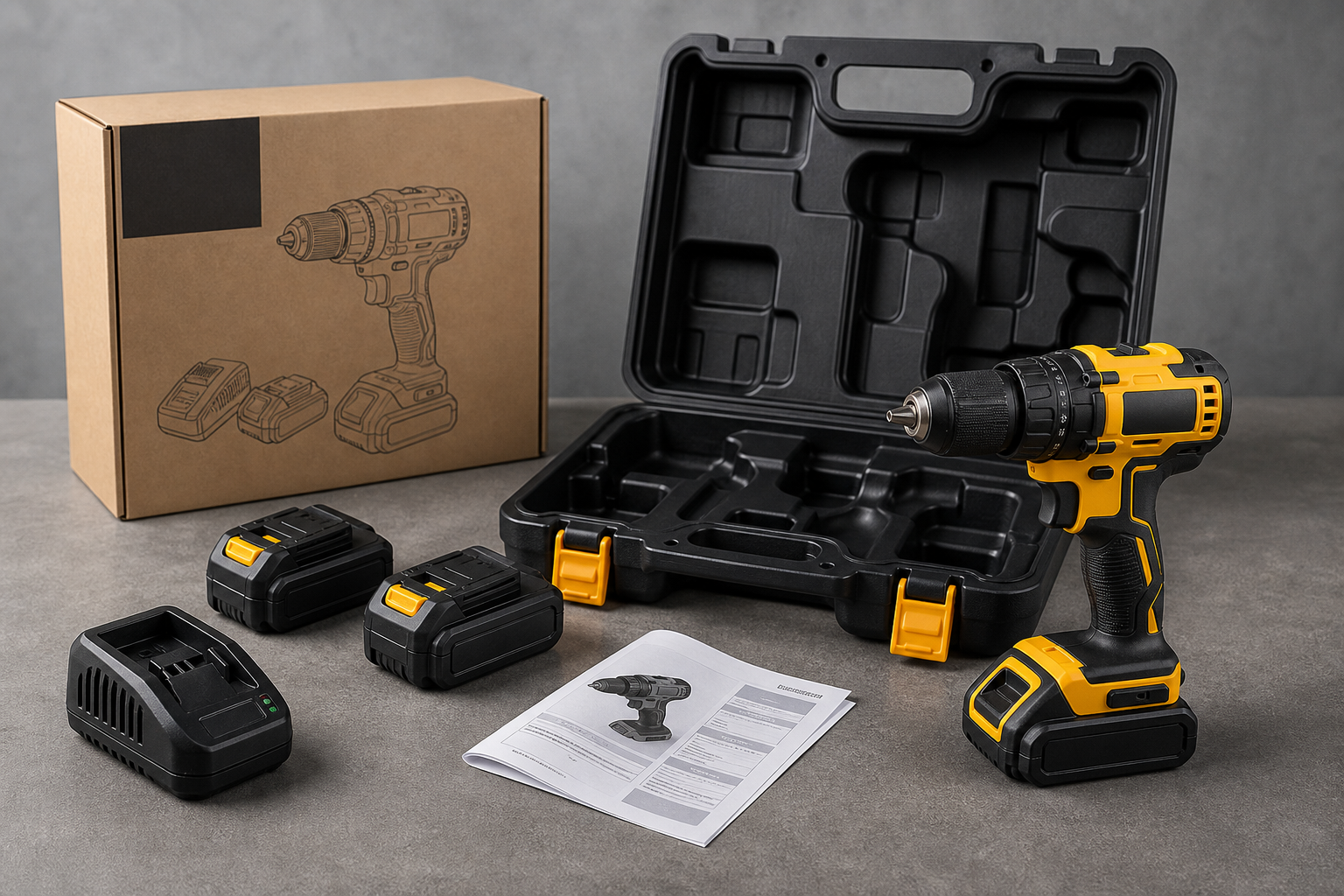
For most new private-label programs, a practical opening range is a drill driver, impact driver, one grinder or saw, a 2.0Ah battery, a 4.0Ah battery and a standard charger. The tools create the shelf story; the batteries and charger create the repeat-purchase story. If the buyer serves contractors, add a 5.0Ah pack or rapid charger as a deliberate upgrade rather than making every kit heavy and expensive.
- Entry retail: 20V drill kit with 2.0Ah battery, standard charger and one accessory set.
- Trade retail: brushless drill and driver with 4.0Ah battery, metal chuck and a stronger case.
- Contractor add-on: 5.0Ah pack, rapid charger and a higher-load tool such as an angle grinder.
- 40V extension: add only when a higher-output application can carry the separate platform on its own.
How should the first range look to a buyer?
Make the first three to five tools look like one system, then give each tool a distinct reason to exist.
A buyer should be able to understand the range from one shelf sign or one product-page image. Start with a core drill driver because it is familiar. Pair it with an impact driver when the channel serves installation work. Add a grinder, saw or light only when it serves a defined buyer job. Then use compatible battery marks, charger icons and capacity labels consistently across every carton and product image. This is where a platform becomes easier to sell than a list of unrelated models.
Give each tool a role in the assortment. The drill can be the entry point; the impact driver can support a faster fastening task; the grinder can give the same battery family a trade-use reason. The battery should have a role too: a 2.0Ah pack for a lighter entry kit, a 4.0Ah pack for the main professional kit, and a 5.0Ah pack as a clear upgrade for users who value longer operation. Avoid offering three similar drill models at launch unless their price, chuck, motor or battery story is meaningfully different.
Sales teams often need a simple way to explain the range internally. Create a one-page range map that includes a photo, model number, tool job, recommended battery, compatible charger, channel and target price band. The same map helps purchasing, warehouse staff, marketing teams and service teams speak about the same system. It also makes later expansion safer: when a new bare tool is proposed, everyone can see which battery and channel it belongs to.
Before you publish the range, ask three practical questions. Can a buyer find the compatible replacement battery in two clicks? Can a warehouse picker tell the 2.0Ah and 4.0Ah packs apart? Can a retailer explain why the upgrade kit costs more? When the answer is yes, the platform has begun to work as a sales tool, not only as an engineering decision.
Match battery, charger and documents before the sample
Confirm compatibility, transport files and target-market labeling before you approve the platform sample.
Battery capacity affects weight, shelf price, carton dimensions and customer expectations. Charger input, plug type and label language affect whether the same kit can be sold in the destination market. For lithium packs, the document route needs the same attention as the product: buyers should confirm the relevant UN38.3 and transport information before an order is locked.
Ask the factory for a one-page compatibility map that lists every tool, battery and charger in the proposed range. Then cross-check the map against the intended channel, intended price, required documents and the first 12 months of SKU expansion. This is the practical moment to use the battery runtime calculator and the battery selection guide, instead of guessing from amp-hours alone.
What must be ready after the first shipment?
A platform earns repeat orders only when replacement batteries, chargers and warranty answers are ready before the range launches.
The customer does not experience a platform only on day one. They experience it when a battery is misplaced, a charger needs replacing, a bare tool is added later or a retailer asks whether two cartons work together. A distributor should decide these answers before the first container leaves the factory. The first order needs a clear item code for every battery and charger, a basic compatibility guide, contact information for technical questions and a realistic reorder path.
After-sales planning is especially important for private labels. A label change can make a compatible battery look unrelated, and an unclear carton can make a retailer sell the wrong charger with a tool. Use the same platform icon, voltage label and capacity format throughout the range. Include the compatibility map in product data, packaging artwork and sales training. Those small details reduce support traffic and make a second order easier to place.
Ask the supplier what remains available after the first production run: battery shells, BMS route, cell specification, charger housing, replacement chuck, gear parts and packaging tooling. The answer does not need to promise an unlimited future. It does need to show the buyer how the product can be serviced and replenished within the intended warranty period. Link this conversation to the manufacturing and QC route so that the test plan and after-sales plan refer to the same configuration.
Use this checklist before you request a platform quote
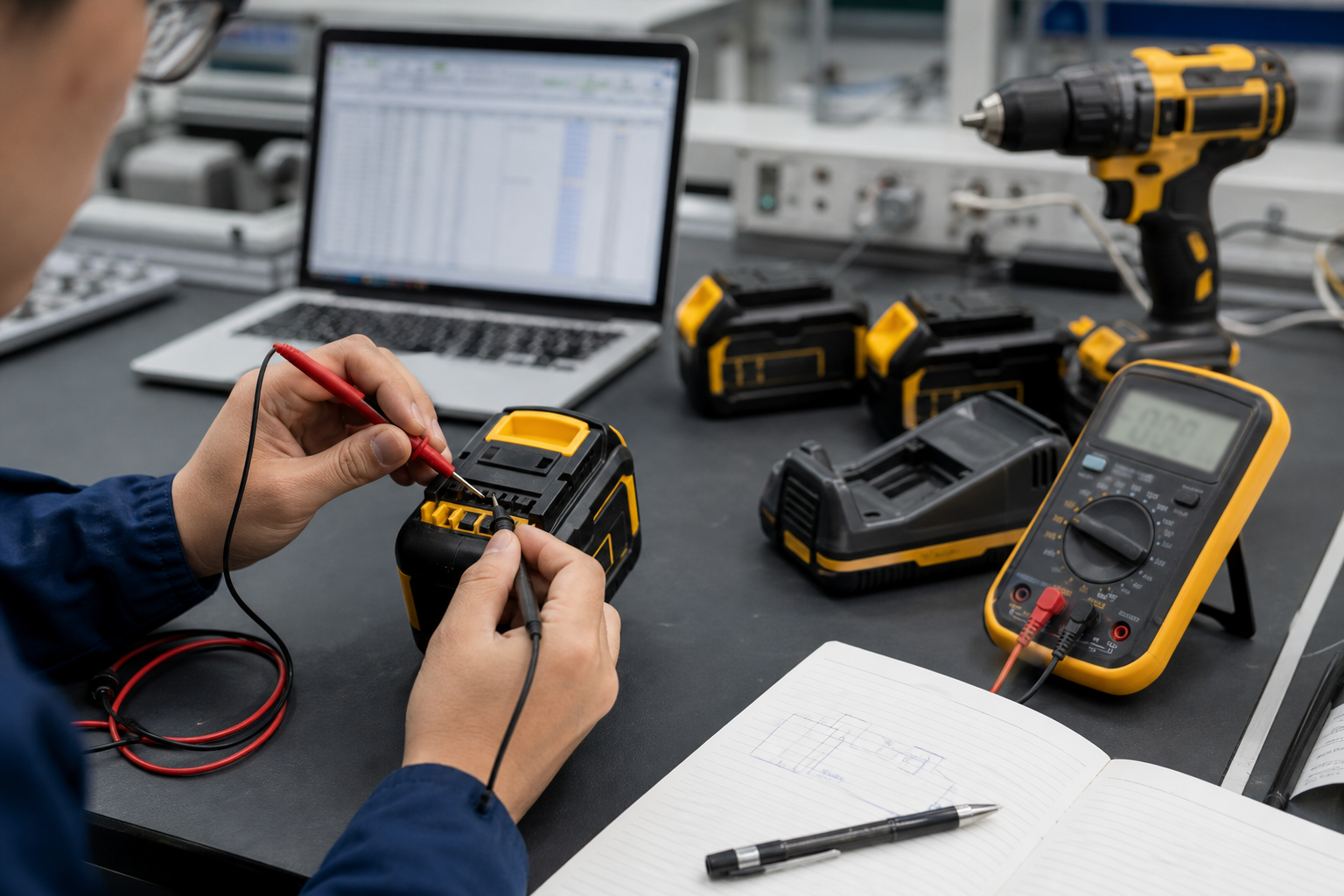
A good RFQ names the buyer, first SKU list, price band, market and document requirements.
- State the channel: DIY retail, professional retail, distributor, contractor or private label.
- Name the three to five first SKUs and the tools you may add in the next 12 months.
- Set a target retail or distributor price band, not only a factory-cost target.
- Specify battery capacity, charger plug, packaging, manual language and target market.
- Request MOQ by SKU, sample lead time, battery compatibility chart and certificate scope.
- Ask how the factory will keep replacement batteries and bare tools visually consistent with the launch kits.
Those details let the supplier respond with an actual platform plan. Without them, the quote will likely be a collection of unrelated SKUs, which is exactly what a shared-battery platform is meant to prevent.
How should you compare two platform offers?
Compare the complete platform map, not only the lowest first-tool quotation.
When two suppliers offer a similar drill, the visible tool can hide the more important differences. One may offer a shared battery family, defined charger route and usable sample plan. The other may offer a good-looking single kit but no clarity on replacement packs, market labels or future bare tools. Put both offers into the same table before choosing: first tools, compatible batteries, capacity options, charger types, MOQ by component, sample timing, documents, packaging and after-sales parts.
Then test the offer against your channel plan. A wholesale buyer may prioritize a broad starter range and fast replenishment. A private label may need consistent colours, carton artwork and a clear expansion path. A contractor distributor may place more weight on runtime, test evidence and service parts. The right factory is the one whose system can support the actual buyer, not the one that gives the most impressive first spreadsheet.
Use the configuration guide to make the component trade-offs visible, then review the exact model pages before asking for a sample. The cordless drill page, impact driver page and angle grinder page show how product-level proof should connect back to the same shared-battery story.
Finally, ask both factories to respond to the same short scenario: one launch market, three first tools, two battery capacities and one expected replenishment route. This exposes whether each quotation is a genuine platform proposal or simply a list of product prices. It also gives the buyer a clean record for internal approval, because the commercial choice can be traced back to the customer, the channel and the system that will support them after shipment.
Frequently asked questions
These answers cover the choices buyers usually make before they sample a new platform.
Is 40V always better than 20V?
No. 40V is better only when the user can benefit from the extra output and runtime. For broad retail and installer ranges, 20V often produces a clearer SKU story and a lower-risk first launch.
Should a new private-label range launch both platforms?
Usually no: launch one 20V platform first, then prove demand before adding 40V. This keeps the battery, charger, carton and replenishment route simpler while the buyer learns what moves.
Can a 20V platform serve professional users?
Yes, if the motor, gearbox and battery capacity match the job. A brushless 20V range with 4.0Ah and 5.0Ah options can serve many trade applications without adding a second voltage system.
What should I ask a factory to show me?
Ask for the SKU map, compatibility chart, MOQ, sample plan and certificate scope. Those five items expose whether the proposed range is a true platform or only a list of tools.
Continue the platform plan
Use the next guide to validate runtime, then use the product and QC pages to validate what you will buy.
Need a platform plan for your market?
Send your channel, target retail band, first SKU list and destination market. We will map the right 20V or 40V route before sampling.