Updated: July 15, 2026 · Reading time: 9 minutes

Daniel helps distributor and private-label teams translate tool applications into the right battery pack, charger and export-document route.
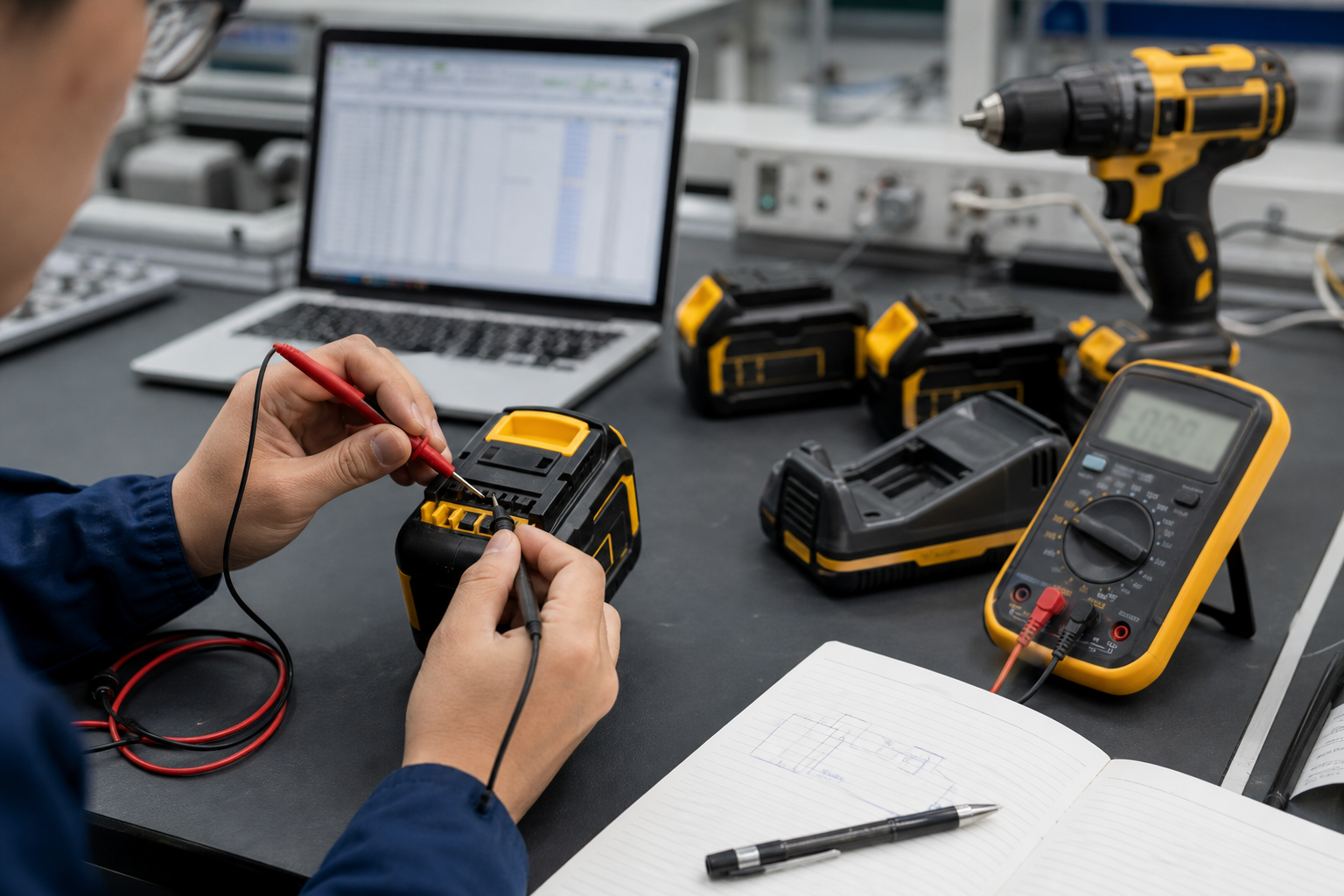
Choose the battery by the work, buyer and kit price, not by the largest amp-hour number. A strong cordless range gives each tool the capacity it needs, protects the pack under load and makes the charger and document route easy for a distributor to manage.
Start with the job the battery must support
Define the tool, material, duty cycle and buyer before you choose a battery capacity.
A compact drill used for occasional assembly does not need the same battery as an angle grinder cutting steel. A retailer may need a lighter entry kit that sits below a target price. A contractor distributor may prefer a heavier kit if the battery reduces downtime on site. Both decisions can be correct, but they are different commercial decisions.
Start by writing one sentence that describes the user: "A DIY buyer wants a light drill kit for home projects," or "A metalworking distributor needs a grinder bundle that can run through short high-load tasks." This sentence tells the supplier whether to propose a 2.0Ah, 4.0Ah or 5.0Ah pack, and whether a standard or rapid charger belongs in the box.
Choose capacity with total kit value in mind
2.0Ah suits entry kits, 4.0Ah is often the core range, and 5.0Ah supports higher-duty upgrades.
| Pack choice | Best fit | Benefit | Watch-out |
|---|---|---|---|
| 20V 2.0Ah | DIY drill kits, promotional retail, lightweight bundles | Lower price and lower carry weight | May feel underpowered in long high-load work |
| 20V 4.0Ah | Professional retail, drill/driver combinations | Balanced runtime, price and shelf appeal | Needs a clear battery-upgrade route for trade buyers |
| 20V 5.0Ah | Brushless tools, grinders, contractor bundles | More usable energy for demanding work | Adds weight, carton cost and shelf price |
| 40V 4.0Ah or 5.0Ah | Higher-output or outdoor tools | Supports a separate premium application story | Should not be launched without a clear reason to carry a second platform |
Capacity is not a free upgrade. A larger pack affects the pack cost, tool balance, carton dimensions, shipping weight and the consumer's first impression. A distributor who only needs a competitively priced drill can lose more sales from a heavy, expensive kit than they gain from a capacity number that the buyer cannot use.
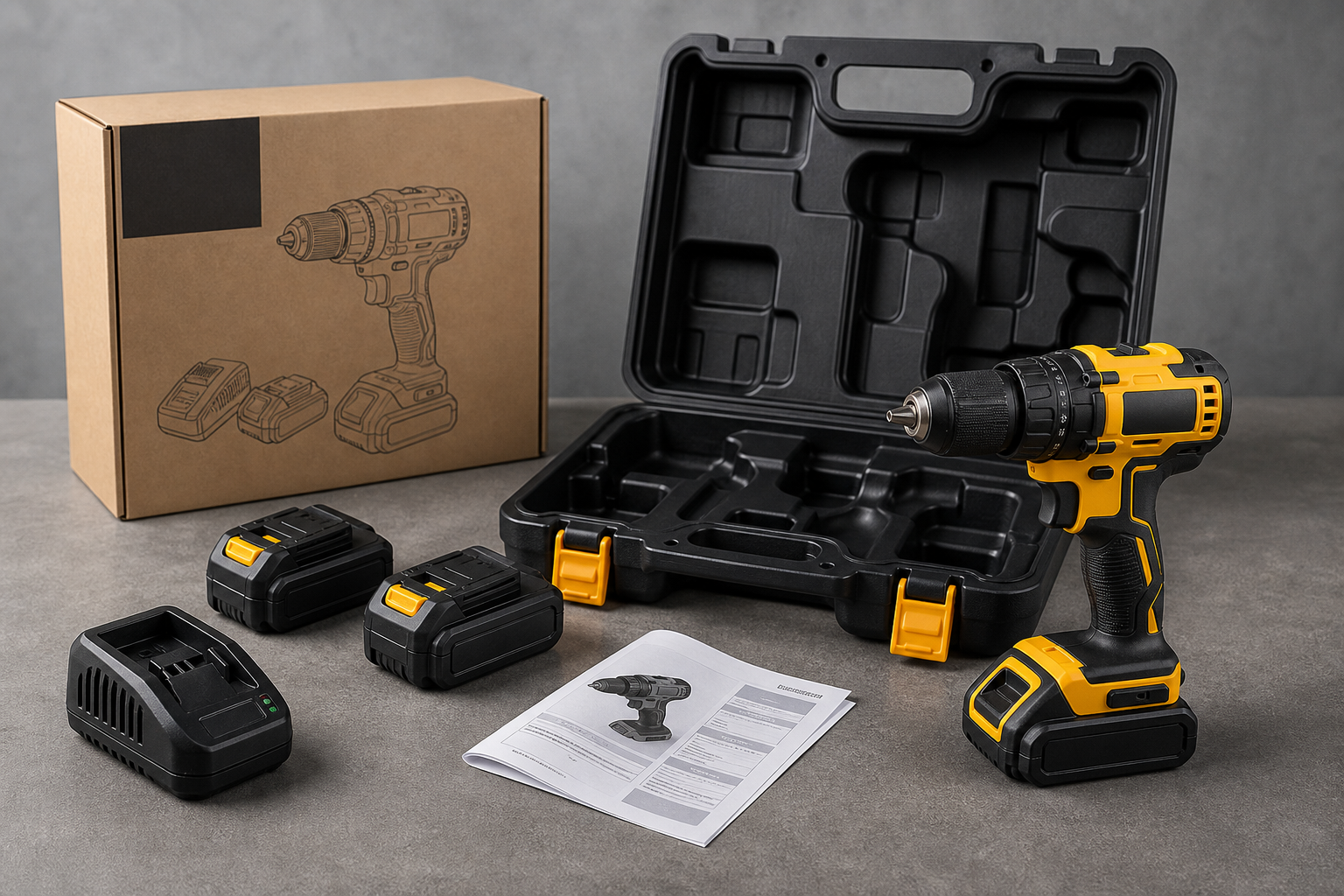
Ask what is inside the pack: cells and BMS
Cell route and BMS protection determine whether the battery behaves reliably under real load.
Capacity alone does not describe a pack. Cell selection affects discharge behavior, heat and long-term performance. The battery management system, or BMS, is the protection layer that manages the pack's voltage, current and temperature limits. For a buyer, the practical question is not "which cell sounds premium?" It is "does this pack behave predictably with this tool, charger and application?"
Ask the supplier to explain the intended cell route and the protection logic in plain terms. Confirm how the pack responds to overload, low voltage and elevated temperature. Then make sure the charger and tool are matched to the same battery family. A pack that is technically compatible but commercially inconsistent can create return risk later: different labels, different capacity claims or a replacement battery that does not clearly fit the range.
- Confirm the pack family and compatibility across each first-launch tool.
- Ask how overload, over-discharge and temperature protection behave in the intended use.
- Request a sample test that matches the product's real work pattern.
- Keep battery labels, carton claims and user-manual wording consistent with the approved configuration.
Choose the charger as part of the buyer experience
A charger must match the battery, destination plug, label route and buyer's expected turnaround time.
A standard charger can make sense in a value drill kit where overnight charging is acceptable. A rapid charger may be worth the upgrade in a contractor line where one battery needs to support repeated work through a day. The choice affects the kit price, retail story and what a distributor must keep available as a replacement part.
Before sample approval, confirm input voltage, plug type, charge time, thermal behavior, label language and the intended market. A charger is often where a global product line becomes local: the same tool may need a different plug, manual and document package for the next market. Treat that as a platform decision, not a last-minute carton change.
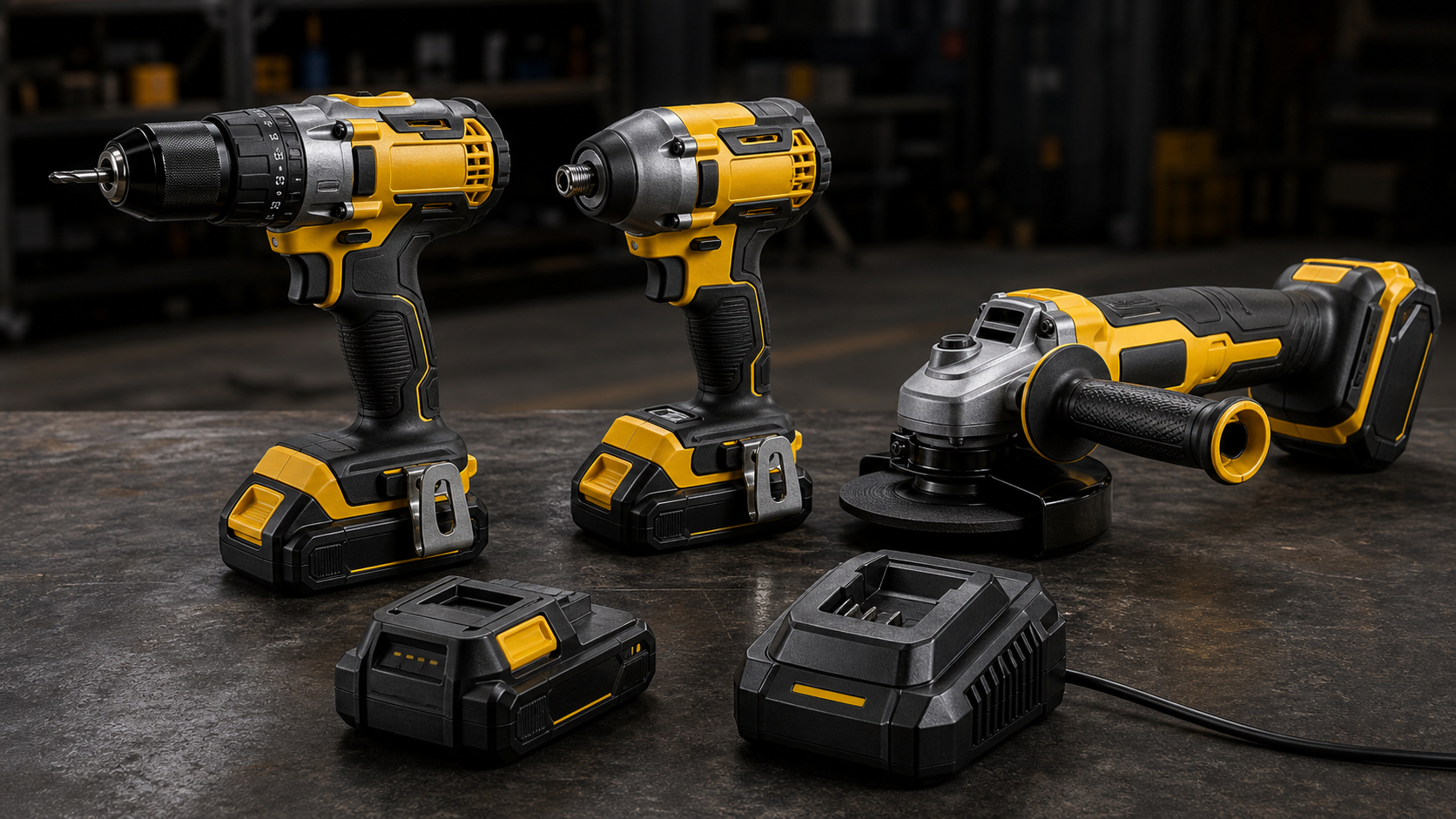
Confirm the document route before the order is locked
Discuss lithium-battery transport and market documents before production, not when cartons are ready to ship.
Lithium battery shipping and product-market entry involve more than the tool specification. The buyer and supplier should establish the applicable transport and documentation route for the chosen pack, shipping method and destination. In this demo range, that conversation includes UN38.3, MSDS-related information, carton markings and any market-specific product or charger requirements.
Ask for a simple document checklist with the sample. It should state which document applies to which battery and charger configuration, who provides it, and what must match on the label, carton and manual. This is especially important when a buyer changes capacity, plug, packaging or market after the first quotation.
Turn the battery choice into a better sample review
Approve the complete kit, not a battery in isolation.
When the sample arrives, review the tool, battery, charger, case, label, manual and expected documents together. Test the tool under a defined load; check the balance in hand; confirm the battery seats securely; watch charger heat and timing; and compare the carton contents with the buyer's channel requirements. This gives the supplier a useful approval record and prevents the bulk order from drifting away from the commercial decision made at the start.
Use the battery runtime calculator to estimate the starting capacity, then read the 20V vs 40V platform guide to decide whether the range should stay on one shared family. From there, the materials and configuration page shows how the battery choice connects to motor, housing, gearbox and warranty promise.
Frequently asked questions
These are the questions importers should close before a battery configuration becomes a production order.
Is 5.0Ah always better than 4.0Ah?
No. 5.0Ah adds runtime, but it also adds weight and kit cost. It suits higher-load tools and contractor users; 4.0Ah is often the better core option for professional retail.
What does a BMS do in a cordless tool battery?
A BMS protects the pack by monitoring voltage, current and temperature limits. It is part of the product-safety and reliability route rather than an optional feature.
What should I check on a charger?
Check compatibility, plug, input label, charge time, heat behavior and market route. The charger must fit the battery, destination and buyer's expected use pattern.
Which documents matter for lithium battery shipping?
Confirm the exact route with the supplier before production. UN38.3, MSDS-related information, carton markings and destination requirements need to match the chosen battery and shipping method.
Continue building the battery route
Use these linked pages to move from pack choice to platform, product and sample approval.
Need a battery and charger recommendation?
Send your tool list, target price, expected user and market. We will recommend a capacity, charger and document route for the sample stage.