Choose the right configuration for your channel, price band and warranty promise.
Compare voltage platform, housing material, battery grade and packaging level before building a product line.

Mia helps importers match cordless configurations, retail positioning and certificate requirements before a sample is released.
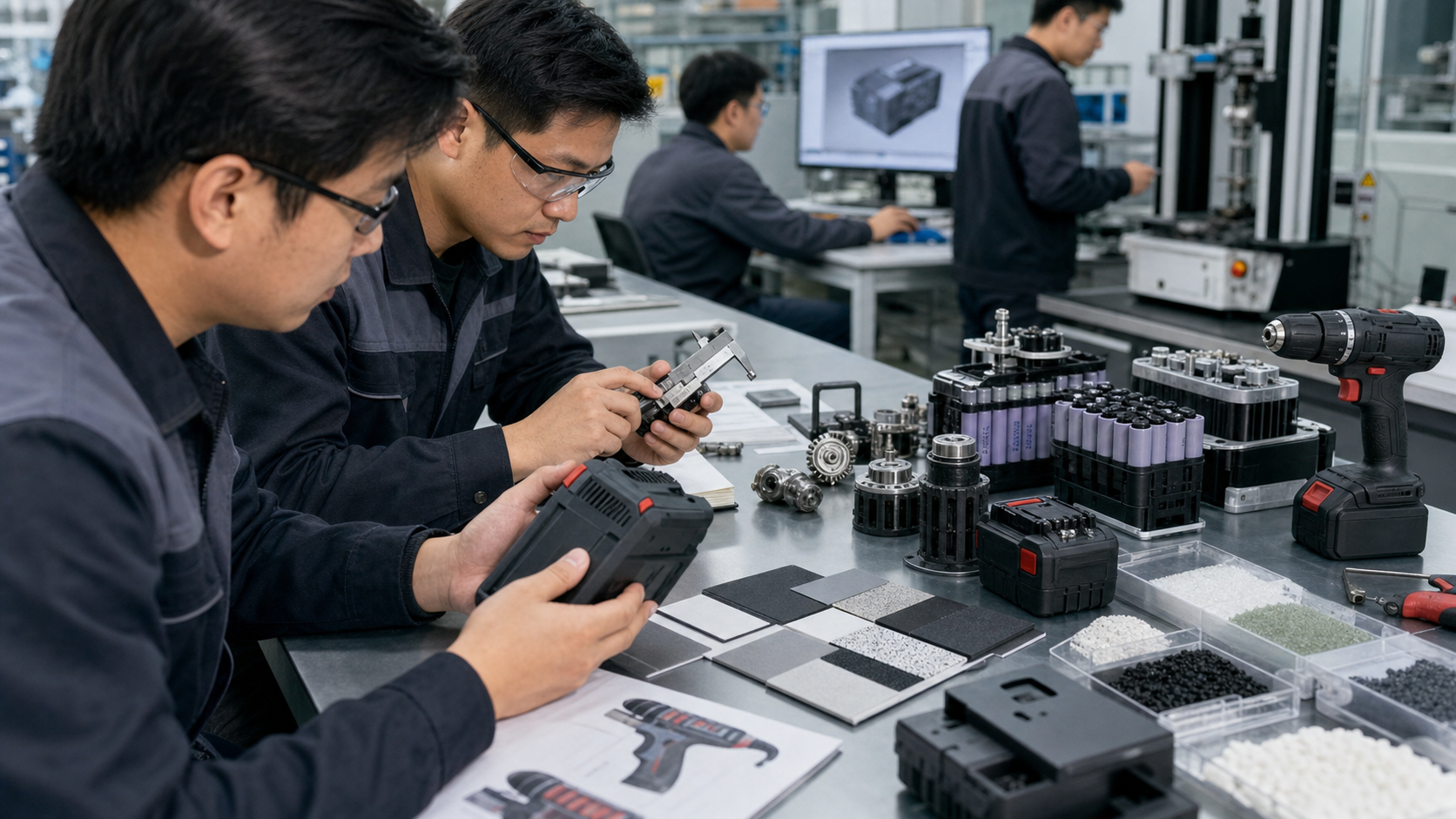
From "cheap tool" to the right tool for the channel.
Choose components around the buyer's actual use, retail position and warranty promise, not around the lowest component cost.
Configuration trade-offs are matched to DIY retail, professional contractors and rental-fleet durability needs.
Which configuration fits your channel?
Match configuration, price band, durability and channel positioning before confirming samples.
| Buyer goal | Recommended configuration | Why it fits |
|---|---|---|
| Entry retail kit | Brushed motor, PA6 housing, 2.0Ah battery | Competitive price for DIY channels and promotional kits |
| Professional retail line | Brushless motor, PA6+GF housing, metal chuck, 4.0Ah battery | Better runtime, higher torque and stronger perceived value |
| Contractor channel | Brushless motor, reinforced gearbox, 5.0Ah battery, BMC case | Higher durability and fewer returns in jobsite use |
| Private label launch | Shared 20V battery platform, color-matched housing, branded packaging | Faster SKU expansion without developing every tool from scratch |
What should change between DIY, professional retail and contractor use?
The buyer's working pattern should decide the component route before the sales team decides the headline price.
DIY and promotional retail
Keep the kit easy to understand: a clear tool application, a manageable pack, a practical charger and packaging that explains what is included. The target is not to remove every cost. It is to avoid a first-use experience that creates returns.
Professional retail
Buyers compare performance, runtime and perceived quality. A brushless motor, metal chuck, 4.0Ah option and durable carry case can support a higher retail position when the product proof and warranty route match.
Contractor and jobsite use
Focus on repeated loading, dust, drops, battery protection, service parts and kit replenishment. A feature that looks minor in a catalogue can matter after months of jobsite use.
Before quoting, ask the buyer who will use the tool, what material they work with, how often they work, whether the battery family must expand, and what warranty promise sits behind the range. The answers shape the motor, gearbox, housing, pack and packaging choices together.
When should a buyer choose ABS or PA6+GF housing?
Use ABS for a price-led entry kit and PA6+GF when the tool must support tougher handling, heat and a stronger warranty position.
ABS can be a sensible commercial choice for a compact drill or household kit when the buyer needs a familiar tool at an accessible price. The decision should still include grip comfort, screw-boss strength, drop expectations and the way the housing works with the motor and battery. A low-cost housing is not automatically poor quality; it becomes a problem only when it does not fit the user, intended task or warranty promise.
PA6+GF brings a different trade-off. It can suit a professional or contractor-facing range where the buyer expects higher resistance around repeated use, heat and harder handling. It also changes material cost, moulding control, surface feel and the story the sales team must be able to prove. Do not describe it as an upgrade by itself. Connect it to a specific tool, test and use condition, then let the buyer see the corresponding QC checks.
For either material, approve a production-reference sample rather than only a colour chip. Check fit lines, grip texture, screw locations, label area and how the housing holds up in the intended handling test. This is the quickest way to make sure the material decision appears in the finished tool, not only in a component list.
Why does each component choice change the buyer's result?
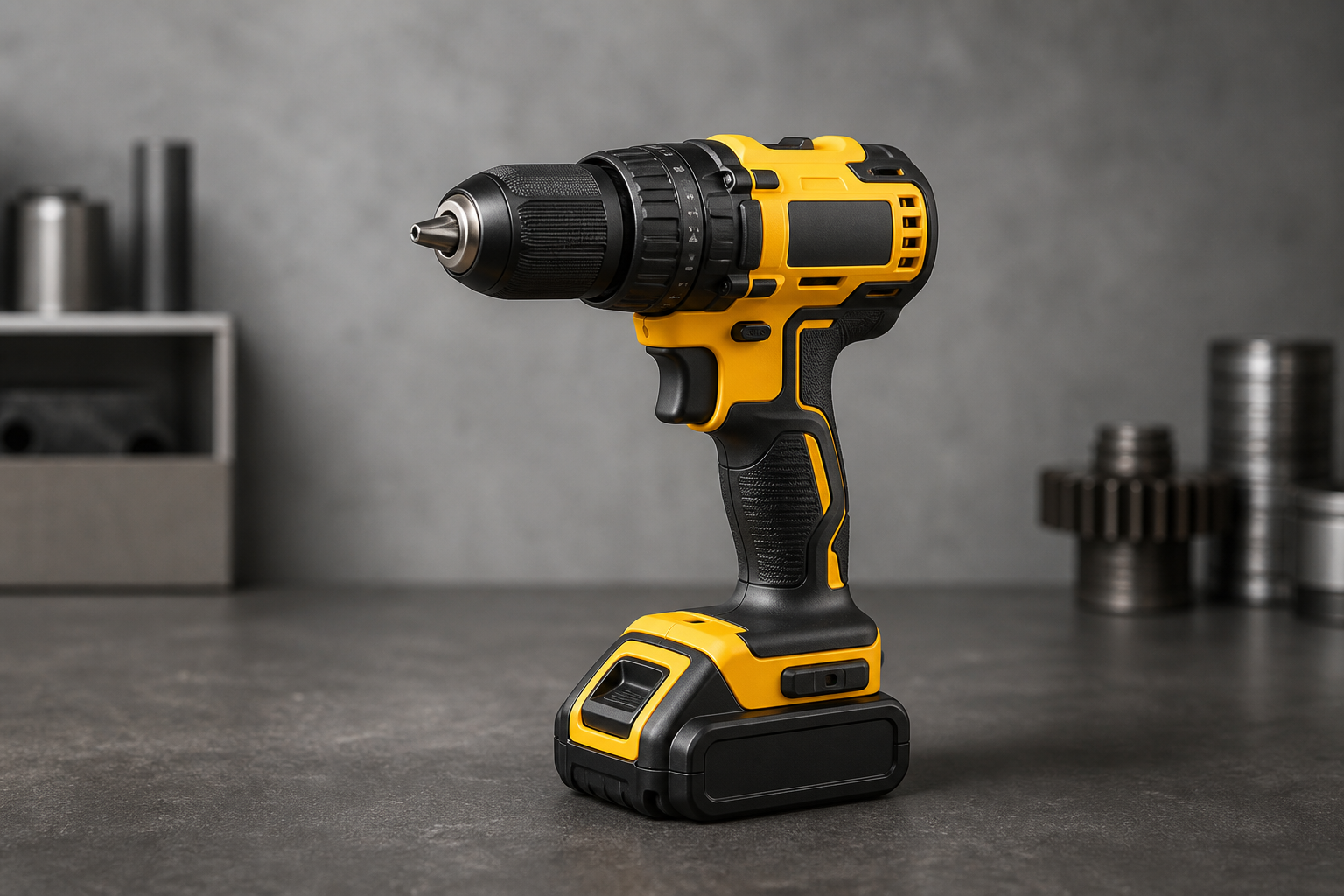
Housing, cells, motor and gearbox affect the user's experience, return rate, compliance route and price story at the same time.
Housing
Standard ABS for entry kits; PA6+GF for professional channels; overmold grip texture can be adjusted by market preference.
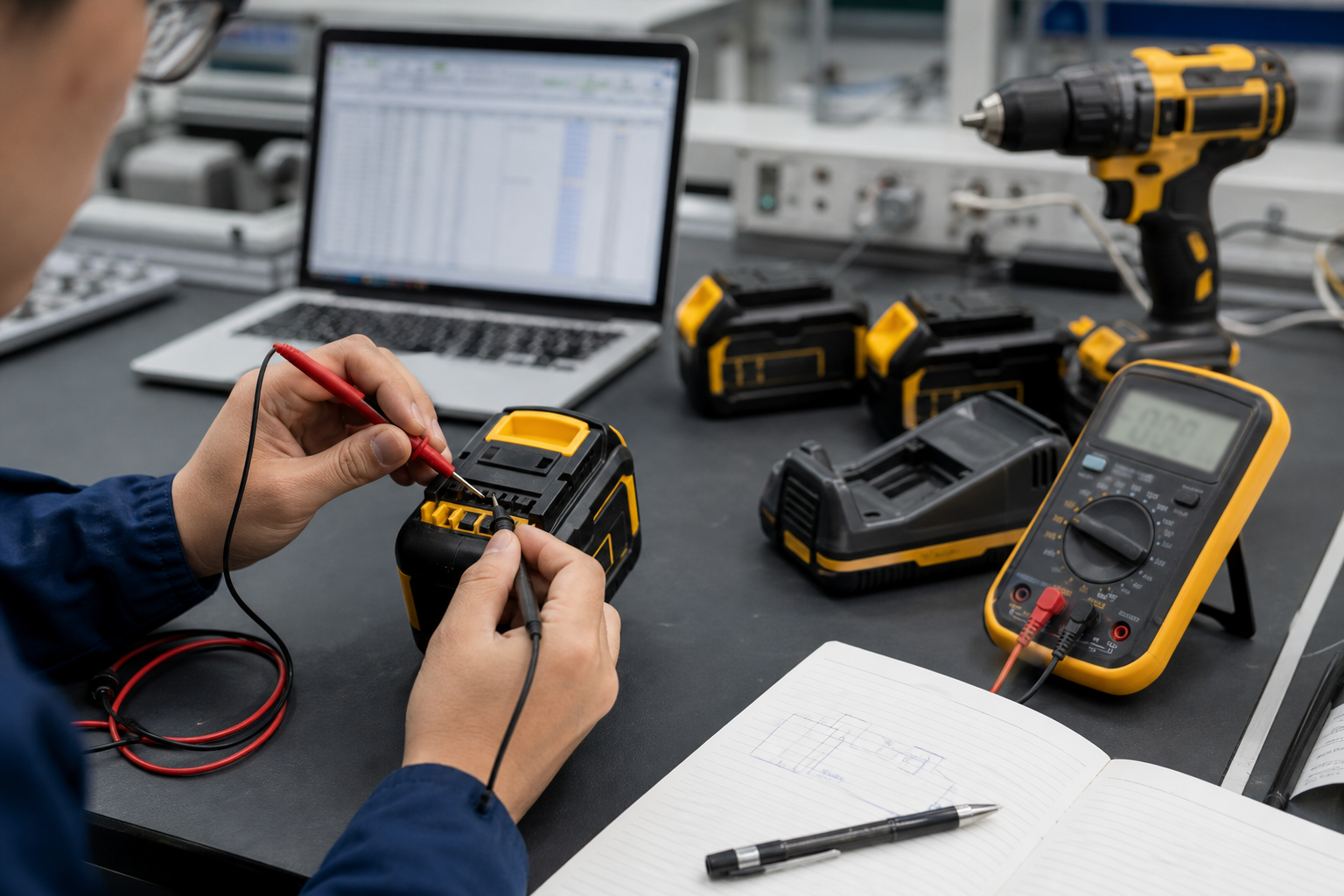
Battery cells
Cell grade, BMS protection and transport documentation are aligned with target market compliance. See the battery selection guide for the complete pack-and-charger decision path.

Gear and motor system
Metal gearbox, chuck type and clutch settings are selected by tool category and torque test expectation.
How do you turn a component list into a reliable production kit?
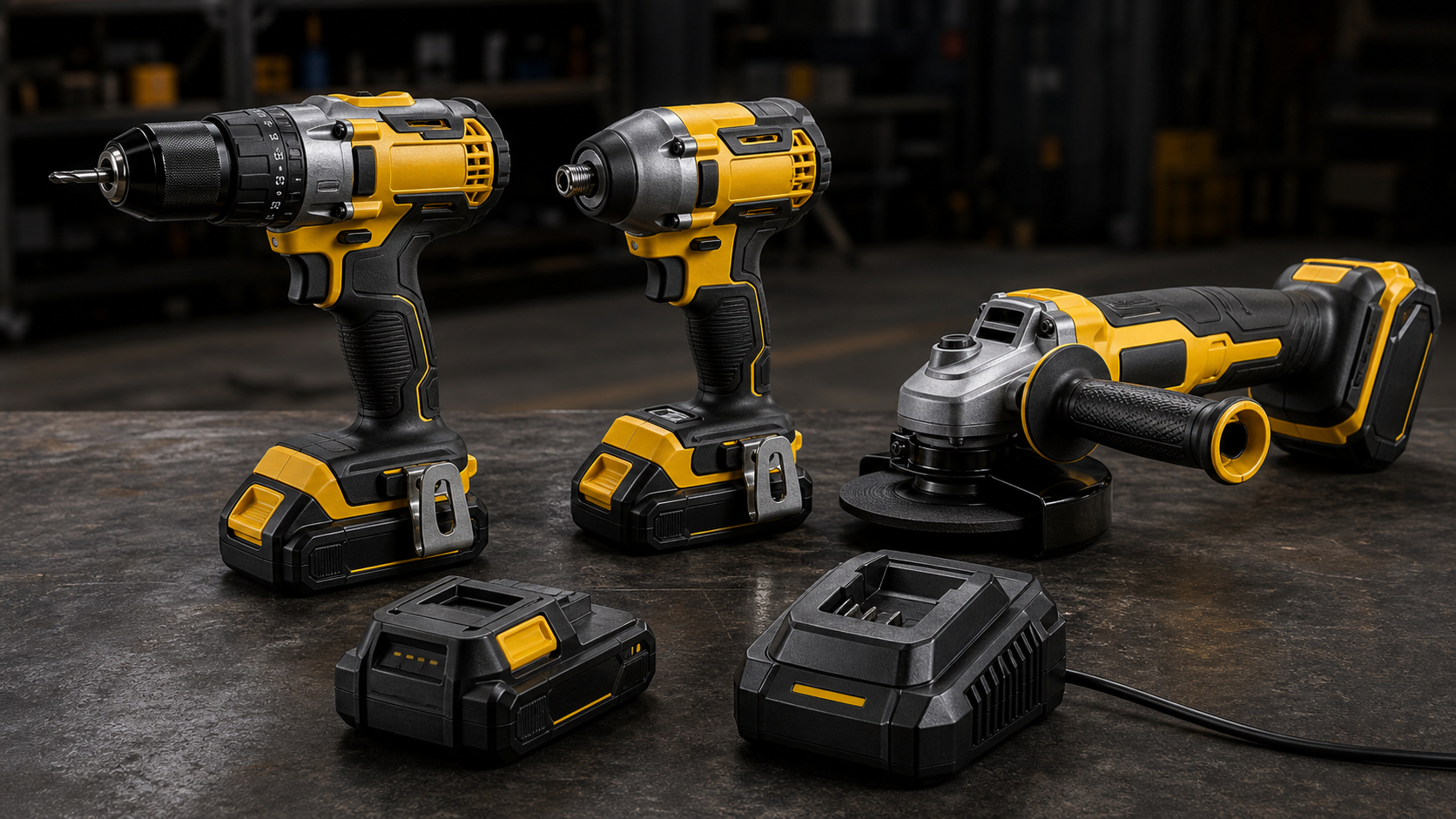
Approve the full tool, battery, charger, packaging and document set together before you approve mass production.
A drill sample can look good while the production kit still carries the wrong charger plug, an unclear carton mark, a battery document gap or packaging that does not protect the tool. The safe approval route is a complete-kit review: exact bill of materials, tooling and colour reference, performance test, battery and charger compatibility, label artwork, carton drop protection and the destination document list.
Use the 20V vs 40V platform guide to decide the shared-battery direction. Then use the battery selection guide and runtime calculator to validate the pack. The final sample should link to Manufacturing & QC for the inspection route and Certificates for the document scope.
What should the buyer be able to verify before they choose the higher-spec kit?
Show performance, durability and kit evidence that matches the configuration being quoted, not a generic logo wall.
Performance proof
Show the tool model, battery pack and test task together. Torque, speed and runtime only mean something when the user can see which configuration produced them. Link the test context to the relevant drill, impact driver or grinder.
Durability proof
Explain the parts that handle repeated work: housing reinforcement, gearbox route, chuck selection, battery protection and pack retention. Then let a buyer see the matching QC process rather than making a broad “heavy duty” claim.
Market-entry proof
Match the plug, charger label, manual language, battery transport file and certificate scope to the destination. The route is clearer when the product page links to the exact document group and the enquiry form captures the market at the start.
A configuration guide earns trust when every claim points toward a product, a test, a document or a real production process. That also helps a purchasing team explain internally why a professional kit costs more than an entry kit and why the difference is worth protecting through the full warranty period. It gives the sales team a clear commercial story and gives the buyer evidence they can use when comparing suppliers. It also makes later range expansion easier because the platform choices were documented at the beginning, with fewer late component substitutions.
What hidden cost appears when the configuration is wrong?
Each configuration has trade-offs in cost, runtime, durability, certification and after-sales risk.
Too-light housing
May pass appearance review but fail contractor drop expectations and increase warranty pressure.
Wrong battery grade
Can reduce runtime, trigger heat complaints and complicate UN38.3 transport documentation.
Weak charger plan
Charger certification, plug type and manual language often decide whether the kit can enter the market.
Send target retail price, warranty promise and market. We will suggest a material and battery plan.
What do importers usually ask before approving a configuration?
Close the questions that affect customer use, shipping, service and replenishment before the first production order.
Is PA6+GF always better than ABS?
No. PA6+GF can suit harder-use channels, while ABS can be a sensible option for entry retail. Match the housing to the tool, expected drops, heat exposure and warranty position.
Should every tool use a 5.0Ah battery?
No. Larger packs add runtime, weight and kit cost at the same time. Use the main tool, expected runtime and target buyer to decide the core pack.
Can a product page promise a certificate before it is checked?
No. Document scope must match the exact product, battery, charger and destination market. Link product claims to the relevant certificate or test route.
What should be approved before production?
Approve the exact bill of materials, sample, performance checks, packaging, labels and market documents as one complete kit. That prevents last-minute changes from moving the risk into shipment.
Not sure which configuration fits your market?
Send your target price, warranty expectation and channel. We will recommend the right material and battery plan.